The U.S. natural stone industry moves roughly $30 billion worth of material a year, according to Census Bureau figures compiled by the Natural Stone Institute. A cracked tile on a job like that isn't just annoying, it's an expensive redo.
A wet saw and a blade look simple enough on paper. But the outcome depends heavily on blade choice, saw type, cutting technique, and how dense the stone is. This guide covers the exact process professionals use, what to set up beforehand, the variables that separate a clean cut from a cracked one, and the mistakes that cause most failures.
TL;DR
- A wet tile saw with a stone-rated diamond blade is the baseline for clean cuts
- Blade quality, water flow, and feed rate matter more than the saw itself
- Softer stones (travertine) and dense stones (granite) demand different handling
- Preparing, measuring, marking, and securing the tile matter as much as the cut
- Rushing the feed rate or using a dry/ceramic blade causes most chipped edges
How to Cut Natural Stone Tile Step-by-Step
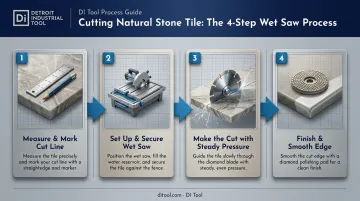
Step 1: Measure, Mark, and Plan the Cut Line
Measure twice. Then mark the cut line with a grease pencil or washable marker instead of graphite, since graphite can scratch soft, porous stone like marble or travertine.
Factor in the blade's kerf, the width of material the blade actually removes. This isn't universal: a 4-inch marble blade might carry a kerf around 0.060 inches, while a 4.5-inch continuous-rim blade can run closer to 1/16 inch. Check your specific blade's printed spec rather than guessing.
Before cutting, check the stone's grain or vein direction. According to the Natural Stone Institute, grain is the direction in which a stone most easily splits. Marble's calcite structure has natural cleavage planes; granite's quartz content does not, so it fractures irregularly instead. Slate has its own cleavage and grain lines, which is why it splits into thin sheets so easily.
Step 2: Set Up and Secure the Wet Saw
Fill the water reservoir completely. The blade needs continuous cooling on both sides, not just a splash, or it will overheat mid-cut.
- Position the tile flush against the saw's fence or guide before you start the motor
- Confirm the blade is rated for natural stone, not just ceramic or porcelain
- Check that the pump intake is fully submerged and the water is clean
Skipping any of these steps is where most crooked or overheated cuts begin.
Step 3: Make the Cut Using Steady, Controlled Pressure
Feed the tile into the blade slowly and consistently. Manufacturer guidance from Pearl Abrasive is blunt on this point: do not force the blade into the material and let it cut at its own pace. Forcing it, or cutting too deep and too fast, is a fast track to chipping.
For thick or dense stone, some installers use a light back-and-forth pass to keep the blade from binding. No manufacturer publishes this as an official technique—it's simply a workaround that experienced cutters lean on. Keep hands well clear of the blade path, and use a push stick on narrow pieces.
Step 4: Finish and Smooth the Cut Edge
Inspect the edge for chipping right after the cut. A diamond hand pad or rubbing stone will knock down any rough spots.
Wipe the tile dry immediately. Porous stones absorb water fast: marble's absorption rate tops out around 0.20%, while travertine can range from 0.10% to 2.5%. Standing water invites mineral staining or, in marble with pyrite content, oxidation spots. Dry-fit the piece before final installation to confirm it fits before committing to adhesive.
What You Need Before Cutting Natural Stone Tile
The right equipment determines whether a cut comes out clean or chipped, full stop. Skimping here costs more in ruined tile than it saves in tool budget.
Equipment & Blade Requirements
A wet tile saw is the baseline, not optional, for cutting natural stone, since dry cutting generates enough heat to stress the material and dull blades within minutes.
Blade type matters just as much:
- Continuous-rim diamond blades produce polished, chip-free edges, ideal for visible cuts on marble or granite
- Segmented blades cut faster but leave a rougher finish, better suited for cuts that will be hidden or grouted
- Turbo-rim blades combine cutting speed with a cleaner edge than standard segmented options
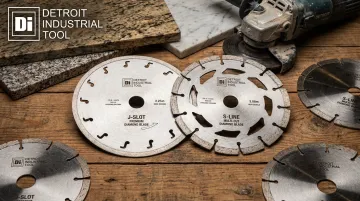
Sourcing a coated, high-performance blade extends life on dense stones. DI Tool's precision cutting tool range includes options like the J-Slot Premium Diamond Blade, built with a continuous rim and heat-venting slots for marble and granite, and the S-Line Multi-Cut Diamond Blade, a segmented option rated for granite, marble, tile, and masonry work.
Stone & Material Considerations
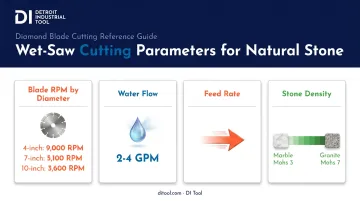
Stone type dictates hardness and brittleness. Granite averages a Mohs hardness of 7, while marble sits around 3, a significant gap that changes how much blade pressure each material can tolerate. Limestone and travertine behave like marble, staying soft enough to chip under too much blade pressure.
Before cutting, inspect every tile for existing cracks or fissures. A hairline flaw that's invisible dry can split wide open the moment the blade applies pressure.
Skill & Safety Readiness
First-time users should test scrap tile first, since stone cuts differently than standard ceramic. Wet saws spray water and run loudly. Non-negotiable gear includes:
- Safety glasses
- Hearing protection
- Non-slip gloves
Confirm stable footing and a clear workspace before starting. Wet saw stations get slippery fast, and that's how minor slips turn into real injuries.
Key Parameters That Affect Cutting Results
Even with the right saw and blade, small variable changes separate a clean cut from a cracked tile.
Blade Rotation Speed
Higher speeds generate more heat, which chips softer stones faster than it helps productivity. MK Diamond's published RPM guidelines set clear limits by blade diameter, with hard upper limits well above these figures:
- 4-inch blade: 9,000 RPM
- 7-inch blade: 5,100 RPM
- 10-inch blade: 3,600 RPM Stick to the blade manufacturer's rated speed for its specific diameter rather than assuming bigger blades run faster.
Water Flow & Cooling
Insufficient water is the number-one cause of blade overheating. MK Diamond's own troubleshooting guidance calls for 2 to 4 gallons per minute as a general wet-blade benchmark, flowing evenly on both sides of the blade.
Inconsistent cooling shows up as burn marks or micro-cracking right along the cut edge, damage you often won't notice until you're grouting.
Feed Rate (Cutting Speed)
Pushing the tile too fast overloads the blade and risks chipping brittle stone. There's no universal numeric feed rate across every stone type and saw; manufacturer guidance stays qualitative, favoring a slow, steady pace. Thicker tiles especially reward patience, since a rushed pass rarely finishes clean on the first try.
Stone Density & Porosity
Dense stones like granite tolerate more blade pressure than soft, porous ones like travertine. Mismatching blade selection to stone density is one of the most common causes of chipped or uneven cuts. A blade built for hard granite, for instance, often overcuts and chips softer marble.
Common Mistakes & Troubleshooting
Most stone-cutting failures trace back to a handful of avoidable errors. The table below breaks down the most common problems, their likely causes, and what to check before your next cut.
| Problem | Likely Cause | What to Check |
|---|---|---|
| Using a dry or ceramic-rated blade on stone | Assuming all diamond blades are interchangeable | Confirm the packaging lists "natural stone" compatibility; a wet-rated blade should never run dry |
| Chipped or cracked edges mid-cut | Feeding the tile too fast or inadequate water flow | Slow the feed rate and verify the reservoir reaches both sides of the blade |
| Wandering or crooked cut lines | Tile not secured flush against the fence or guide | Re-clamp the tile, re-mark the line, and restart the cut rather than correcting mid-pass |
| Blade overheating or glazing | Continuous cutting without pauses or insufficient cooling | Take cooling breaks and inspect the rim for a shiny, glazed look; dress a glazed blade before continuing |
When to Use This Method & Alternatives
A wet tile saw suits straight cuts, bulk jobs, and projects that demand polished, precise edges. It isn't always the most practical option, though.
Angle Grinder with Diamond Blade
When it's better: Curved cuts, notches, or on-site adjustments where hauling a wet saw isn't realistic. DI Tool's diamond blade catalog includes options built for grinder-based cutting on granite, marble, and masonry.
Trade-offs: Requires more manual control, and edges chip or run uneven more easily without practice.
Manual Tile Cutter/Scoring Tool
When it's better: Small jobs or thin, softer stone tiles where breaking out a power tool feels like overkill.
Trade-offs: Limited to straight lines only. Manufacturer guidance from RUBI notes that granite, marble, and slate lack the uniform internal tension of manufactured tile, so they don't snap predictably like ceramic does.
Professional Fabrication/Cutting Service
When it's better: Large-scale projects, custom shapes, or premium marble slabs where mistakes get costly.
Trade-offs: Higher cost and longer lead time than doing it yourself, but far cheaper than replacing a slab you ruined mid-cut.
Frequently Asked Questions
What is the best blade for cutting natural stone tile?
A continuous-rim diamond blade rated for natural stone gives the cleanest, most chip-free cut. Segmented blades cut faster but leave a rougher finish, fine for edges that will be hidden.
Can you cut natural stone tile without a wet saw?
Yes, an angle grinder with a diamond blade or a manual scoring tool works for small jobs. Results are less precise and more prone to chipping than a wet saw delivers.
Why does my stone tile chip when I cut it?
Chipping usually comes from a mismatched blade, feeding the tile too fast, or insufficient water cooling during the cut. Check all three before blaming the stone itself.
How do you cut natural stone tile without cracking it?
Use a steady, unhurried feed rate, a stone-rated diamond blade, and consistent water flow on both sides. Rushing any one of these raises the odds of a crack.
Do you need a special blade for granite versus marble?
Denser stones like granite often need blades rated for harder materials, while softer marble typically works fine with a standard stone-rated blade. Check the blade's material rating before assuming it's interchangeable.
How thick can a wet tile saw cut through natural stone?
Most 10-inch wet saws cut stone tile up to roughly 1 inch thick in a single pass, though capacity varies by model. Thicker slabs may need a saw with a larger blade diameter or multiple passes to finish cleanly.