
Wet tile cutting adds more complexity on top of that baseline risk. Water and electricity share the same workspace. Silica dust — a respiratory hazard — can still be present even when a water supply is running. And a worn, mismatched, or improperly mounted diamond blade introduces failure modes that no amount of cautious handling can fully compensate for.
Safe wet tile cutting isn't about wearing the right gloves and calling it done. It depends on three things working in unison: a properly selected and inspected blade, an uninterrupted water supply, and consistent operating discipline from setup through shutdown. This guide covers all three.
Key Takeaways
- Never run a wet-cutting diamond blade without continuous water flow — even briefly
- Inspect the blade for cracks, warping, glazing, or segment loss before every session
- Match the blade to the tile material: porcelain, ceramic, glass, and stone each require different blade specifications
- Wear ANSI Z87.1-rated eye protection, hearing protection, cut-resistant gloves, and slip-resistant footwear on every cut
- Let the blade reach full RPM before contact, then feed the tile with steady, even pressure — forcing it shortens blade life and risks cracking
Safety Guidelines for Wet Tile Cutting with Diamond Blades
Wet tile cutting safety spans three distinct phases: setup, active cutting, and shutdown. A gap in any one phase puts both the operator and the cut at risk.
The risks fall into three categories:
- Mechanical — blade failure, tile kickback, laceration from contact or fragment ejection
- Thermal — blade overheating when water flow is insufficient or interrupted
- Electrical — shock or electrocution risk when power equipment operates near water without proper GFCI protection
Pre-cut and mid-cut checks need to be built into every session — not treated as a one-time setup exercise.
General Safety Precautions
PPE requirements for wet tile cutting:
- Eye protection — ANSI/ISEA Z87.1-rated safety glasses or goggles to guard against tile fragments and wet spray
- Hearing protection — OSHA sets the hearing conservation action level at 85 dBA; wet tile saws routinely exceed that threshold
- Gloves — cut-resistant or heavy-duty gloves for handling tile offcuts and during cleanup; DI Tool carries options including Cut Resistant Micro Foam Nitrile Coated Gloves suited for this environment
- Footwear — steel-toed or slip-resistant boots, given the wet floor conditions that are unavoidable during wet cutting

Workspace preparation:
- Confirm the cutting surface is stable and non-slip
- Ensure adequate lighting across the entire cut path
- Keep bystanders clear of the blade's path and trajectory zone
- Position the saw so runoff water drains away from electrical connections
GFCI protection is mandatory. OSHA's construction electrical rules require GFCI protection for 120-volt, 15- and 20-amp receptacles that are not part of permanent wiring. Many DIYers overlook this. Water and electricity near an unprotected outlet is an electrocution risk, not just a tripped breaker.
Safety During Setup and Installation
Before mounting any blade, inspect it:
- Check the core for cracks and confirm it is flat — a non-flat or cracked core is a disqualifying defect
- Look for missing or cracked segments, which indicate structural failure risk under load
- Check for overheating "blueing" on the steel core — a sign the blade has already experienced thermal damage
- Inspect for glazing: a glazed blade has a bond surface where diamonds are no longer exposed, meaning it will generate heat instead of cutting. It must be dressed or replaced before use
Correct blade mounting matters as much as blade condition:
- Confirm the blade fits the saw's arbor diameter exactly
- Verify the directional arrow on the blade matches the saw's rotation direction — a reversed blade won't cut and may fail under load
- Ensure collars are identical in diameter, clean, and flat before tightening
Do not proceed with setup if:
- The blade shows cracks, segment separation, or warping
- The water delivery system is blocked or producing inconsistent flow
- The blade diameter does not match the saw's rated capacity
- GFCI protection is absent from the power supply
The Dos of Wet Tile Cutting with Diamond Blades
Maintain Continuous Water Flow
Water performs three functions during wet tile cutting: it cools the blade core to prevent thermal glazing, suppresses respirable silica dust, and reduces friction for a cleaner cut. A 2019 risk assessment found quartz in all respirable dust samples collected during wet saw tile cutting — meaning water suppression isn't optional, it's protective.
MK Diamond recommends 2–4 gallons per minute, equally distributed on both sides of the blade, as a general wet cutting flow rate. Check mid-job that flow hasn't reduced or stopped — a partially blocked line is easy to miss while focused on the cut line.
Let the Blade Reach Full Speed Before Contacting Tile
The DEWALT D24000 manual is explicit: allow the motor to reach full speed before cutting, and wait until the water stream completely covers the cutting wheel. Forcing a blade into material before it hits rated RPM stresses the blade core and increases the risk of segment loss or deflection.
Use Steady, Controlled Feed Pressure
Both hands should guide the tile with even, consistent pressure throughout the cut. A light wax pencil or tile marker line before cutting keeps your attention on the cut path — not the blade itself. Let the diamond segments do the work. The moment you find yourself pushing harder to compensate for slow cutting, that's a sign something is wrong with the blade.
Match the Blade to the Tile Material
Using the wrong blade is one of the fastest ways to ruin a tile and accelerate blade wear. General guidance by material:
| Tile Type | Blade Recommendation |
|---|---|
| Porcelain | Continuous turbo or J-slot blade rated for hard, dense materials |
| Ceramic | Continuous smooth rim blade for chip-free cuts on glazed surfaces |
| Glass | Continuous rim blade with very fine diamond grit, glass-specific rating |
| Natural stone | Blade rated for the specific stone type (granite, marble, slate) |
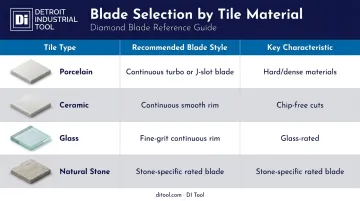
DI Tool's lineup includes dedicated options across these categories — the J-Slot Premium Diamond Blade for porcelain and granite, the All-Surface Supreme Premium Diamond Blade for ceramic, and a dedicated Glass Tile Diamond Blade for glass applications.
Use the Blade Guard at All Times
The guard channels water back onto the blade and contains tile fragments within a defined zone — while also keeping your hands clear of a spinning blade. Removing it for access or convenience strips away all of that protection at once.
The Don'ts of Wet Tile Cutting with Diamond Blades
Here's a quick-reference summary before the details:
- Never run a wet blade without water — even briefly
- Never use a blade on an incompatible saw
- Never force or twist the tile mid-cut
- Never skip the manufacturer's manual
- Never remove PPE at any phase of operation
Don't Run a Wet Blade Without Water — Even Briefly
MK Diamond states flatly: wet cutting blades can never be used dry. DEWALT's D24000 manual adds that dry cutting damages the wheel and increases silica dust exposure. Even a few seconds without water raises blade temperature enough to overheat the metal bond, dull or dislodge diamonds, and warp the blade core. A warped blade cuts inaccurately and becomes a safety hazard under load.
Don't Use a Blade on an Incompatible Saw
Saws are engineered for specific blade diameters and arbor sizes. Using an oversized blade on an undersized saw stresses the motor and creates wobbling, fluttering, and potential core cracking at speed. Never exceed the saw's rated blade diameter. That specification is a hard limit.
Don't Force or Twist the Tile During the Cut
Feed the tile in a straight, controlled line. Any lateral movement — wrist rotation, pivoting, redirecting mid-cut — puts sideways stress on a spinning blade. The blade can bind, deflect, or crack under that stress. If a straight-line cut isn't possible with the current setup, stop and reposition before continuing.
Don't Ignore the Manufacturer's Manual
The manual specifies correct RPM range, maximum blade diameter, water flow requirements, and material compatibility for that specific saw and blade combination. Skipping it doesn't save time. It removes the information needed to prevent misuse and equipment damage.
Don't Remove PPE at Any Phase of Operation
Gloves, eye protection, and hearing protection must stay on through setup, active cutting, and cleanup. Tile dust and wet spray continue after the saw stops. Removing tile offcuts and handling cut fragments presents its own laceration risk that doesn't end when the blade does.
Common Wet Tile Cutting Mistakes to Avoid
Skipping the Pre-Use Blade Inspection
Operators frequently assume a blade that performed well in the last session is still in good condition. Heat cycling, tile hardness variation, and wear between uses can leave a blade compromised in ways that only show up under load: a cracked blade at speed or a ruined cut halfway through a project. Inspect every time, without exception.
Cutting Too Fast and Applying Excessive Pressure
Rushing the feed rate causes diamond segments to skip across the tile surface rather than grind through it. The result is chipping along the cut edge, accelerated blade glazing, and loss of dimensional accuracy — along with wasted tile and a prematurely spent blade. Ease off pressure and let the blade set the pace; forcing it faster costs more than the time saved.
Ignoring Warning Signs During Cutting
Stop immediately if you notice any of the following:
- Loss of blade speed or reduced cutting efficiency
- Unusual noise, vibration, or chatter
- Reduced water pressure or interrupted flow
- A burning smell or visible smoke
- Visible blade wobble or erratic movement
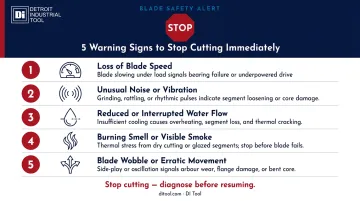
Each of these signals points to a failure in progress. Stop feeding the tile, let the blade spin down completely, and diagnose the problem before resuming. Cutting through warning signs risks blade failure, tile breakage, and injury.
Frequently Asked Questions
Can I use a diamond blade to cut tile?
Yes — diamond blades are the standard tool for tile cutting. The blade must be rated for the specific tile type (ceramic, porcelain, glass, or stone), and wet-cutting blades should be used with a continuous water supply for clean cuts and longer blade life.
Why is my tile chipping when I cut it?
Chipping most commonly results from feeding the tile too quickly, using a worn or wrong-grit blade, running the blade without adequate water, or applying lateral pressure during the cut. Each of these breaks consistent diamond-to-tile contact, producing a fractured edge rather than a clean grind.
What do professional tilers use to cut tiles?
Professionals primarily use wet tile saws with diamond blades for precision straight cuts. Angle grinders with diamond blades handle curved cuts or tight spaces. The wet saw is preferred because continuous water flow produces cleaner cuts and extends blade life considerably.
How much water does a wet tile saw need during cutting?
Water flow should be continuous and sufficient to keep the blade visibly wet throughout the entire cut. MK Diamond recommends 2–4 gallons per minute, equally distributed on both sides of the blade, as a general guideline for wet cutting blades. Check mid-job that flow hasn't dropped.
How do I know when my diamond blade needs to be replaced?
Pull the blade from service when you notice any of these signs:
- Requires noticeably more pressure to maintain cutting rate
- Cut edges are increasingly chipped
- Segments appear worn flat or are missing
- Blade shows visible warping or cracks
Can a wet cutting diamond blade be used dry?
No. Wet-rated blades are not designed for dry operation. Running them without water causes rapid overheating, premature segment loss, and potential blade failure — dry cutting requires blades specifically engineered with cooling slots or turbo segments for heat dissipation.
Every wet tile cutting job starts the same way: confirm blade condition, verify water flow, check PPE, and review your workspace setup. These aren't one-time steps — run through them at the start of each session. The habits that prevent chipping, blade failure, and injury are the same ones that get skipped when a job feels routine.