
Picking the wrong blade doesn't just cost you a tile. It costs replacement material, a burned-out tool, and hours you didn't plan to lose. Porcelain and natural stone are unforgiving, and the tool you reach for first matters more than most DIYers realize.
This guide answers the direct question, will carbide cut tile, then breaks down how carbide and diamond tooling actually differ, so you can pick the right one before you make the first cut.
Key Takeaways
- Carbide handles soft ceramic tile but wears out fast on porcelain or stone
- Diamond tooling grinds through hard, brittle tile, producing cleaner edges than carbide
- Tile hardness, project size, and budget should drive your tool choice, not habit
- Pros default to diamond for tile, saving carbide for wood, metal, and shop work
Carbide vs Diamond: Quick Comparison
Here's how the two stack up side by side:
| Factor | Carbide | Diamond |
|---|---|---|
| Cost | Lower upfront, sold at most hardware stores | Higher upfront due to bonding/coating process |
| Composition | Tungsten carbide with a cobalt binder | Diamond particles sintered or electroplated onto steel |
| Durability on tile | Dulls fast on dense porcelain | Holds an edge across far more cuts |
| Cut quality | Prone to chipping on brittle tile | Smooth, chip-free edges (continuous rim) |
| Best use case | Metal, wood, plastic, soft ceramic | Porcelain, stone, glass, dense tile |
Carbide wins on price and versatility outside of tile work. Diamond wins wherever hardness and edge quality matter.
What is Carbide (and Where Does It Fit)?
Carbide, more precisely cemented tungsten carbide, is a composite of tungsten-carbide particles bonded with a cobalt-rich binder. Hardness varies by grade, ranging from roughly 700 to 2,200 HV30 on the Vickers scale depending on the specific formulation (Hyperion's cemented-carbide hardness data).
That's tough enough to outperform standard steel tools on wood, drywall, and metal, but it's not in diamond's league. Diamond sits at Mohs 10, the hardest natural material known, which is why it grinds through what carbide can only scratch at (GIA on diamond hardness).
That hardness gap explains carbide's real strength: affordability and versatility across softer substrates, not brute cutting power on dense ceramics.
Where Carbide Actually Works Well
Carbide shows up in a few distinct tile-adjacent forms:
- Carbide-tipped blades for softer ceramic wall tile, like Bosch's PRO Soft Tile line, rated for ceramic tile in the 5 to 10 mm thickness range
- Carbide burs for deburring metal trim, thresholds, or transition strips installed alongside tile
- Carbide-tipped scoring tools used for general cutting tasks around a tile job, though not for tile itself
On a job site, carbide typically handles the surrounding work: cutting backer board framing, trimming wood transitions, shaping metal edging. DI Tool's carbide end mills and burs, including coated options like ALTIN and TICN, are built for exactly this kind of precision metalworking, not for slicing through porcelain.
The catch comes when carbide meets hard, dense tile. It can technically score softer ceramic, but push it against porcelain or natural stone and the edge dulls fast, often leading to chipped corners and a rougher cut than the project calls for.
What is Diamond (and Why It Cuts Differently)?
Diamond tooling doesn't cut tile the way a blade cuts wood. Instead, diamond particles bonded to a metal matrix grind through the material via abrasion. As the metal bond wears down, it exposes fresh diamond crystals underneath, which keeps the tool cutting effectively over a long service life (Virginia Abrasives on diamond blade bonds).
That grinding action, rather than a sharpened edge, is precisely why diamond handles brittle, hard materials without chipping them the way a blade edge would.
Blade Types You'll Actually Encounter
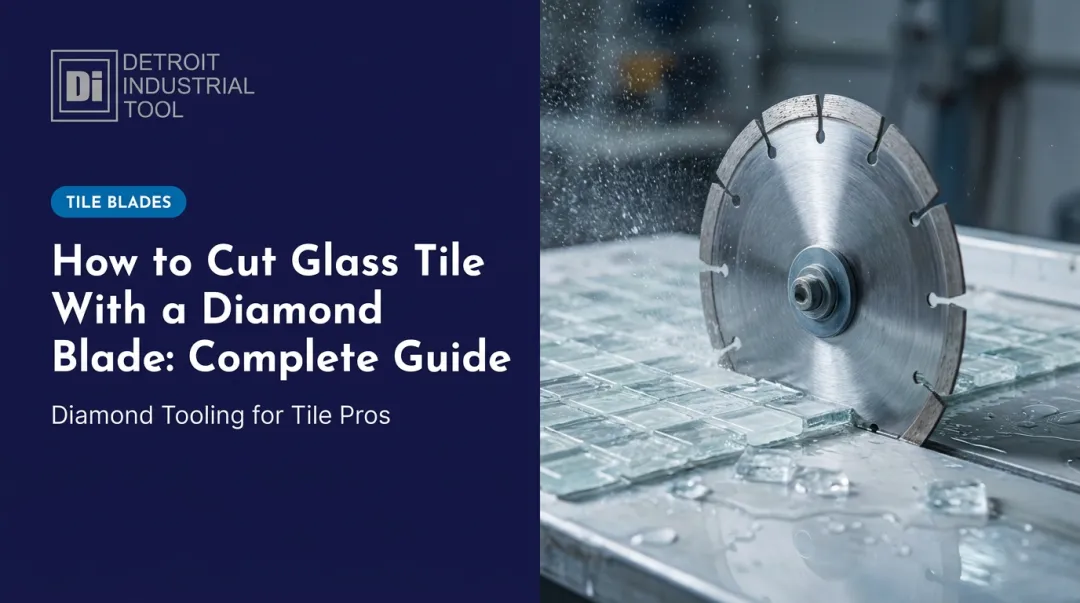
- Continuous rim – smooth edge for chip-free cuts, the standard choice for finished tile work
- Segmented – gaps between segments for faster cutting on concrete and dense stone
- Turbo rim – combines speed with more aggressive cutting, generating more heat in the process
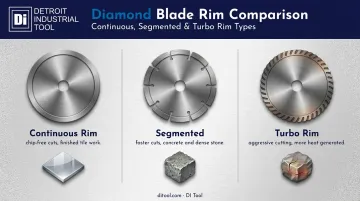
Bosch reports its purpose-built continuous rim ceramic disc lasts up to 1.8 times longer than its own standard ceramic cutting disc, backing up why continuous rim is the go-to for finished porcelain and ceramic edges. DI Tool's catalog includes several tile-focused options in this vein, including a Turbo Mesh Tile Diamond Blade built for precision cuts in tile and stone.
Wet Cutting Isn't Optional for Most Jobs
Cutting porcelain and stone generates fine silica dust, a genuine health hazard. OSHA classifies stationary tile saws cutting porcelain, stone, and tile as covered equipment under its construction silica standard, requiring continuous water delivery to the blade to control dust (OSHA's stationary masonry saw guidance).
Water also cools the blade, extending its working life. Dry-cutting diamond blades do exist, but they suit smaller jobs where dust can be managed another way.
Where Diamond Earns Its Keep
- Continuous rim blades for bathroom and kitchen porcelain tile installs
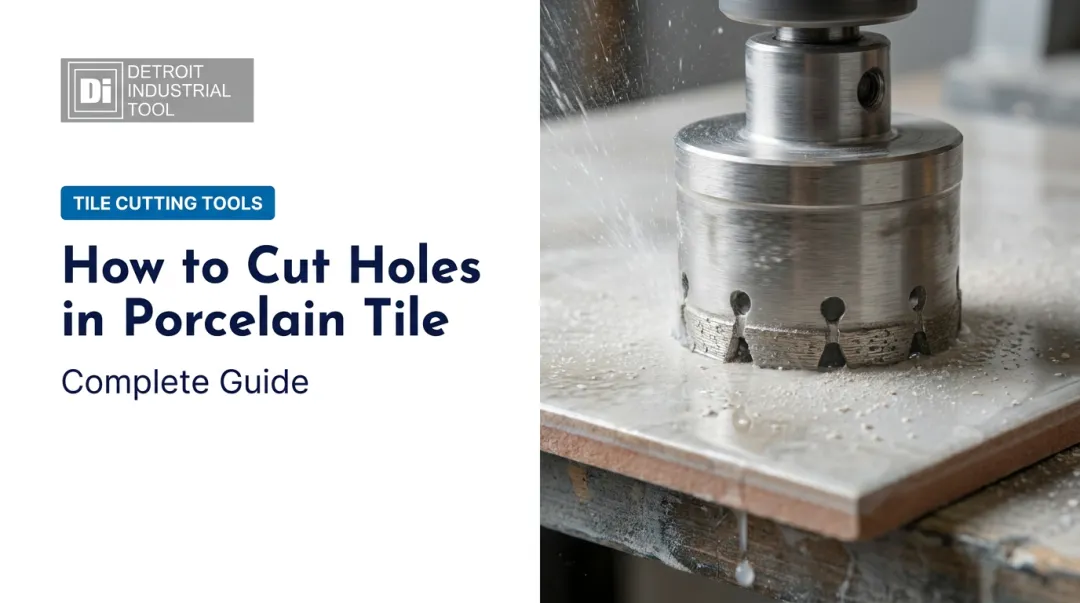
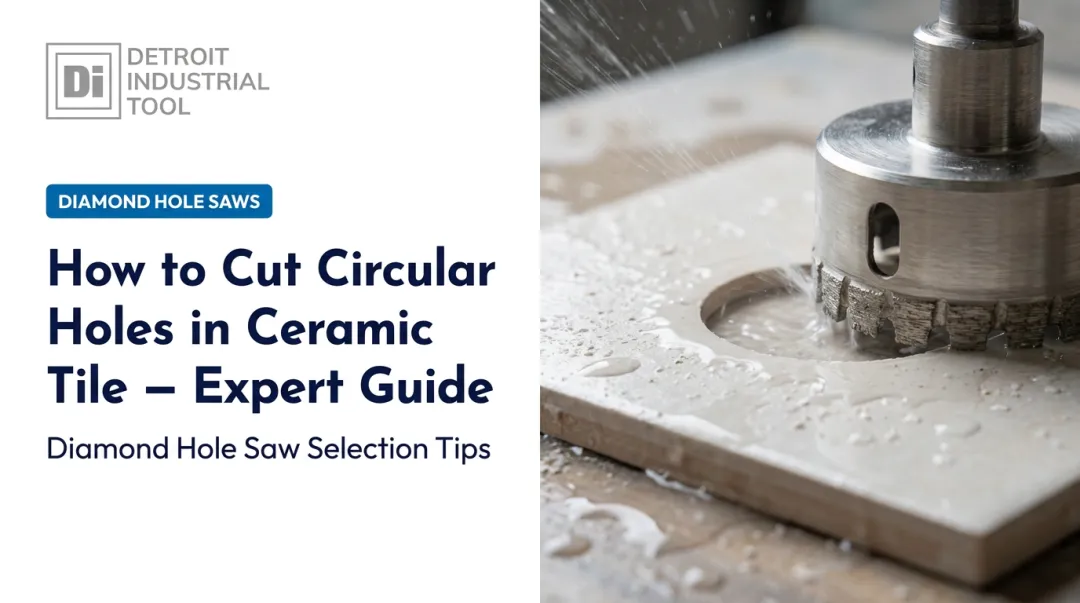
- Diamond core bits for drilling clean holes for plumbing fixtures
- Segmented and turbo blades for large-format commercial tile and stone projects
Whenever chip-free edges are non-negotiable, diamond is the tool installers reach for first.
Carbide vs Diamond: Which is Better for Cutting Tile?
The right answer depends on five things: tile hardness, project scale, budget, desired cut quality, and whether wet cutting is even possible on site.
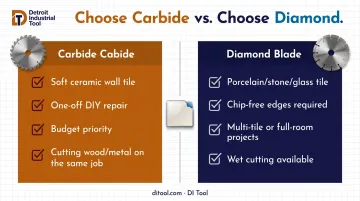
Choose carbide when:
- You're cutting soft ceramic wall tile, not porcelain
- It's a one-off DIY repair, not a full installation
- Budget outweighs finish quality
- You also need to cut wood, metal, or drywall on the same job
Choose diamond when:
- You're working with porcelain, natural stone, or glass tile
- Chipped edges aren't acceptable (visible cuts, showers, backsplashes)
- The project involves multiple tiles or a full room
- Wet cutting is available to control dust and heat
A common trigger for switching tools mid-project is repeated chipping. An installer starts with a carbide blade on what looks like standard ceramic, only to discover the tile is a dense porcelain body.
After a few ruined pieces and a dulling blade, the switch to a diamond continuous rim blade usually happens fast. The difference in edge quality shows up immediately on the next cut.
Quick takeaway: match the tool to the tile, not the other way around. And if that same project also involves shaping metal thresholds or brackets, keep a set of precision carbide tooling on hand. DI Tool's carbide end mills and burs handle that metalwork cleanly while your diamond blade stays dedicated to the tile itself.
Conclusion
There's no universal winner between carbide and diamond. It comes down to matching tool hardness to tile hardness. Carbide covers softer ceramic and general-purpose cutting; diamond handles porcelain, stone, and anything where a clean edge is the whole point.
Get that match right from the start, and you'll waste fewer tiles, replace fewer blades, and finish the job faster than if you'd guessed. DI Tool stocks both carbide burs and diamond tile blades, so grabbing the right one is a quick call away.
Frequently Asked Questions
What type of blade is best to cut tile?
A diamond blade, particularly a continuous rim type, is the best choice for tile. It grinds through hard, brittle material without chipping, while carbide only works reliably on softer ceramic tile.
Can a carbide blade cut porcelain tile?
Yes, carbide can score or cut porcelain, but it wears out quickly and often causes chipping. Diamond remains the more reliable choice for this denser material.
Is a carbide or diamond drill bit better for tile?
Diamond drill bits last longer and drill cleaner holes on hard tile. Carbide bits are more budget-friendly but best reserved for occasional use on softer tile.
How long do diamond blades last compared to carbide on tile?
Diamond blades typically outlast carbide by a wide margin on hard tile, thanks to their abrasive-grinding action rather than a sharpened edge that dulls quickly.
Do I need to use water when cutting tile with a diamond blade?
Wet cutting cools the blade, controls silica dust, and extends the blade's working life. Dry-cutting diamond blades exist too, but they suit smaller, dust-managed jobs better.
Can a diamond blade be used to cut metal or wood?
Standard diamond tile blades aren't built for metal or wood and can be damaged by the heat and material properties involved. Carbide-tipped blades are the better fit for those materials.